Magoksa Temple in Gongju
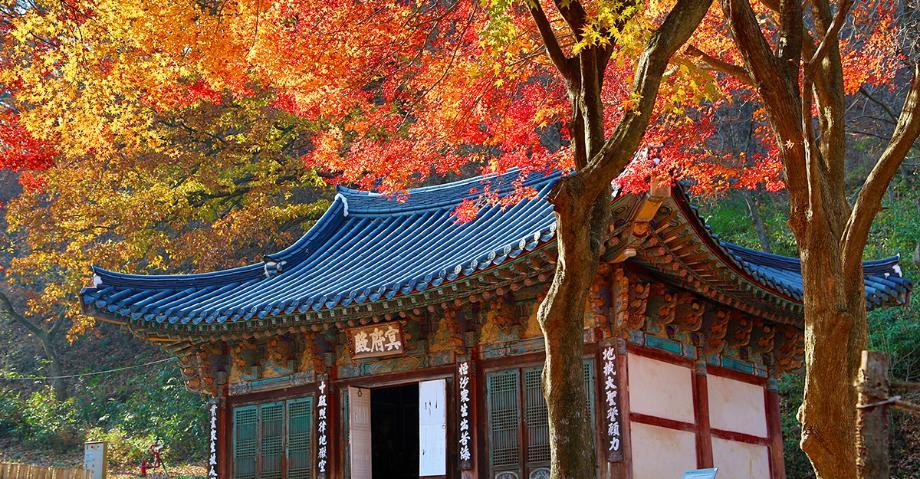
As the nickname 'Spring Magok' suggests, Taehwasan Mountain, where Magoksa Temple is located, is renowned for the beauty of its trees and spring flowers that come to life in the spring sunlight.
There are two different records about the founding of Magoksa Temple on Taehwasan Mountain. According to the "Taehwasan Magoksa Sajeok Iban" (1851), it was founded by Jajang Yulsa after returning from the Tang Dynasty in China with the support of Queen Seondeok, and it underwent five major renovations. Another record, the "Seongyo Yangjong Daebonsan Magoksa Yeongil Yakcho," states that "Bojo Seonsa Chejing founded Magoksa Temple, and later, Beomil Guksa and Doseon Guksa expanded and renovated it." Magoksa Temple, famous for its stunning scenery and annual Greenery Festival in spring, is divided into two areas by a stream.
One side, Namwon, is a meditation area, and the other side, Bukwon, is for worship. Yeongsanjeon Hall, the representative hall of Namwon and the center of the meditation area, is the oldest building in Magoksa Temple. 'Yeongsan' is an abbreviation of Yeongchuksan, where Buddha gave sermons, and Yeongsanjeon is the space that brings this mountain into the temple. The representative hall of Bukwon, Daegungjeon Hall in Magoksa Temple, retains its original form. It is a hall that houses the Buddha and murals depicting his life, known as Palsangdo, and is also called Cheonbuljeon because it enshrines a thousand Buddhas. It was rebuilt by Gaksun Daesa during the Joseon Dynasty (1651) and is the oldest building in Magoksa Temple, located to the west of Haetalmun Gate.
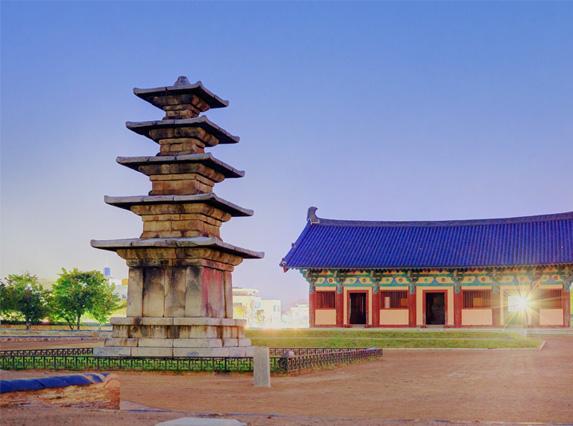
The five-story stone pagoda in Magoksa Temple, which gives a different impression compared to other stone pagodas in Korea, should not be missed. This relic, resembling a Lama Pagoda, is a representative example of the Lamaist culture introduced through exchanges with the Yuan Dynasty in the late Goryeo period. Additionally, Magoksa Temple is famous for its lineage of painter monks, to the extent that it is called 'Nambang Hwaso,' and has produced numerous painter monks over the generations. To this day, a Buddhist memorial ceremony called Bulmodaryejae is held to honor these painter monks.
-
Address
966, Magoksa-ro, Sagok-myeon, Gongju-si, Chungcheongnam-do
-
Contact
+82-41-841-6221
-
Visiting Hours
Summer (March to October): 9AM - 6PM
Winter (November to February): 9AM - 5PM
-
Stamp
In front of the 5-story stone pagoda (near the Templestay Office)
-
Admission Fee
Free
-
Website
-
Directions
Get off at Gongju Intercity Bus Terminal → Take Bus No. 771 at the Intercity Bus Terminal (towards Singwan Elementary School) Bus Stop → Get off at Magoksa Bus Stop → Walk for 20 minutes