










Program


Schedule
- status past
- type
- participation type on-site participation
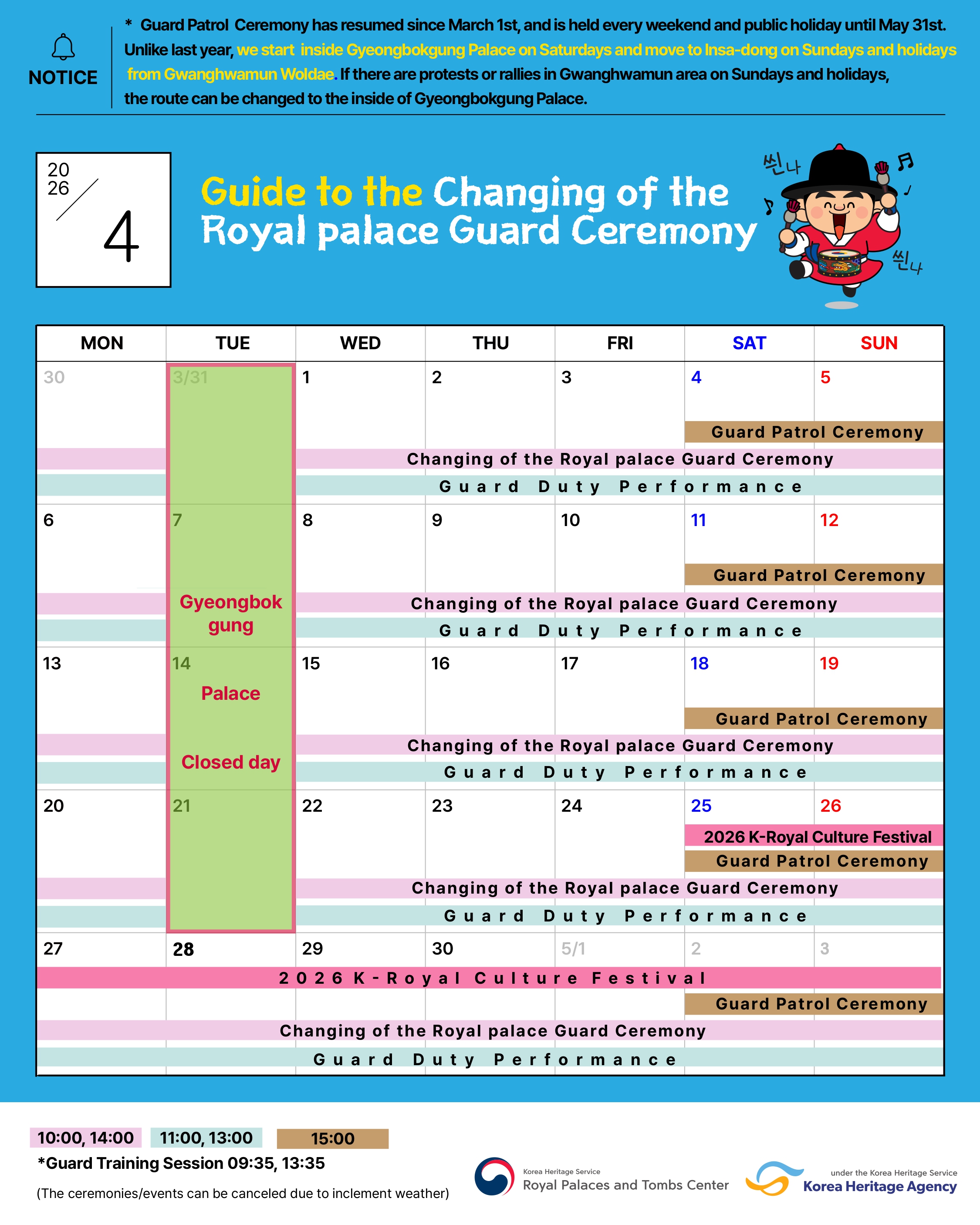
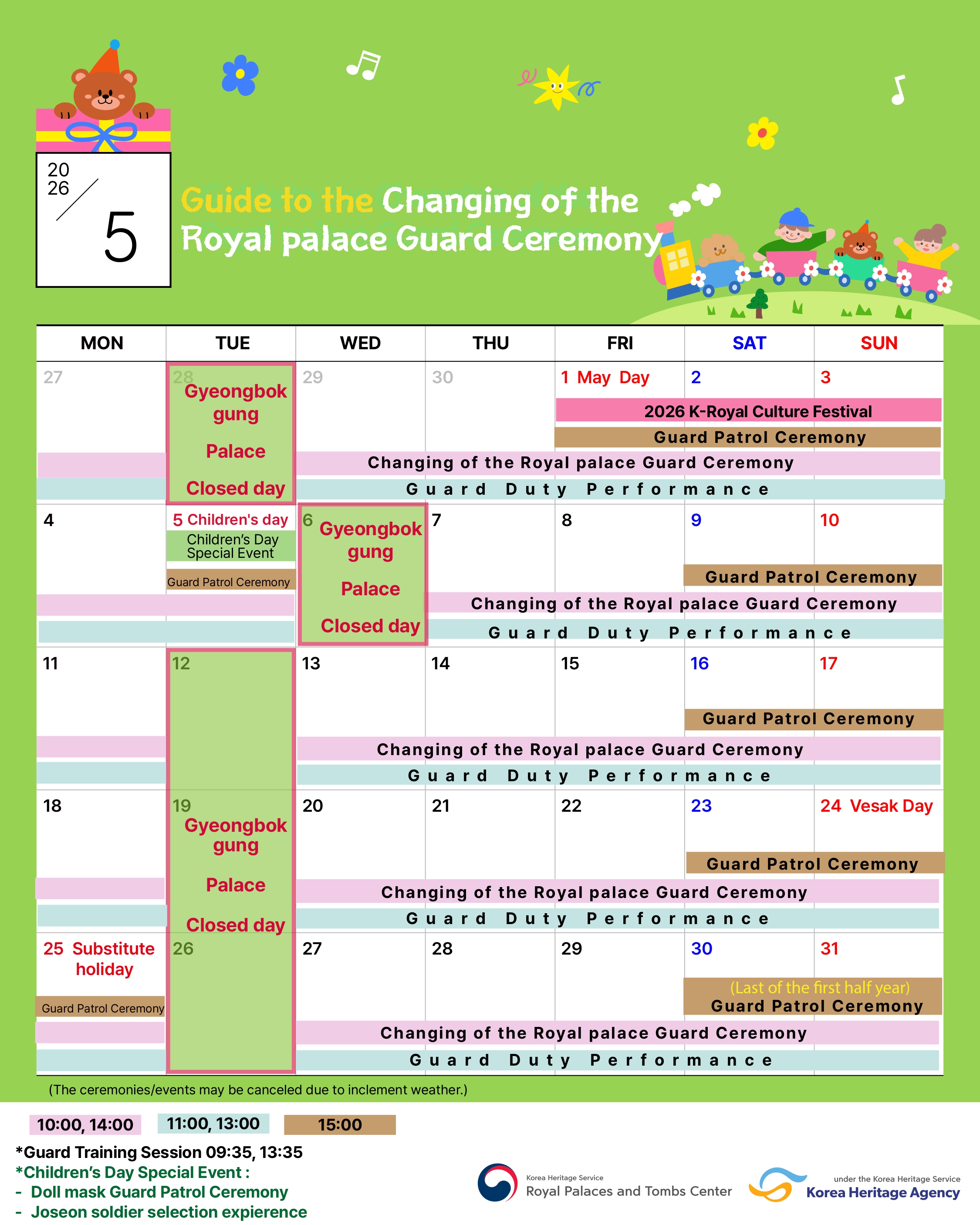
- period 2026-04-24~2026-05-03
- time MON,TUE,WED,THU,FRI,SAT,SUN 10:00(20minutes) / 14:00(20minutes)
- location HeungnyemunGate Square
- personnel
- inquiry
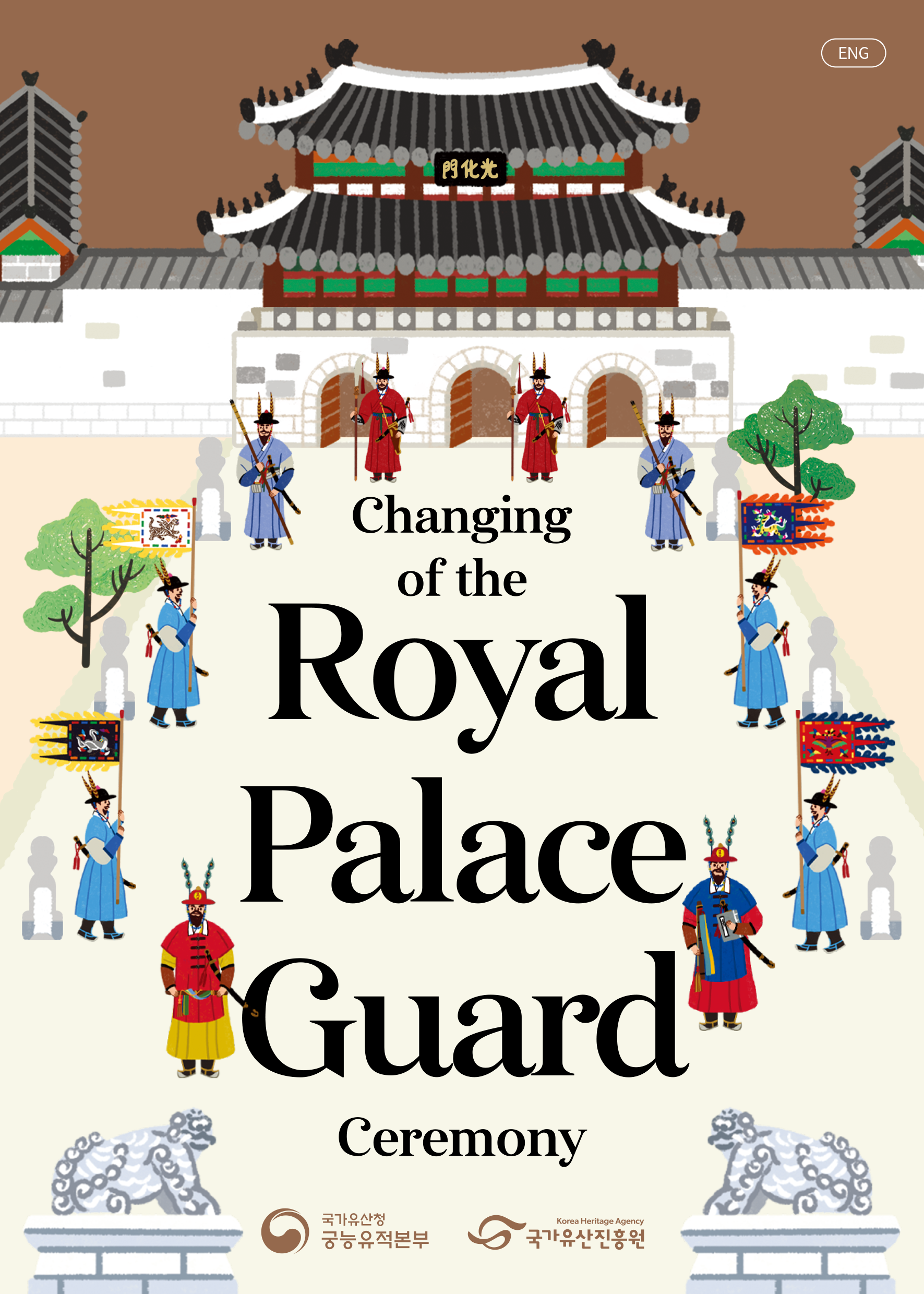
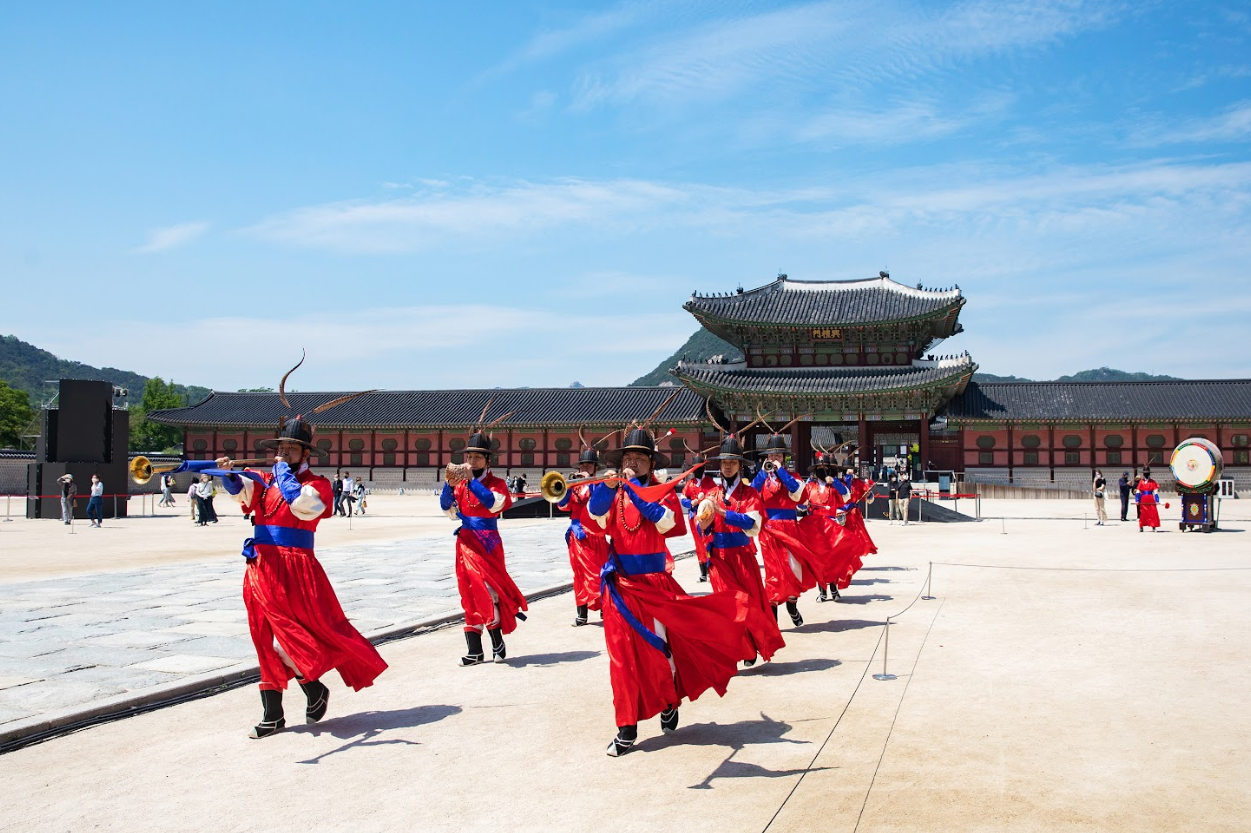
○ Changing of the Royal Palace Guard Ceremony
- This traditional ceremony reenacts the process of the current sumunjang and the sumunjang who has come to relieve him, confirming one another’s identity and changing shifts. The royal palace guards, whose attire and ceremonial items are based on sources from the 15th century, offer a vivid picture of what soldiers would have looked like in early Joseon.
- Time : 10:00, 14:00(Duration : 20 min.)
○ Guard Duty Performance
- Visitors can see how the soldiers guarding Gwanghwamun changed shifts. The chwirachi uses the tak, a small signal bell, to convey the sumunjang’s orders. Jeokgan is a ritual through which the sumunjang checked whether weapons were being properly managed as well as the soldiers’ conduct.
- Time : 11:00, 13:00 | Duration : 10 min.
○ Guard Training Session
- Visitors can see how royal palace guards trained.
- Times and/or venues may be subject to change.
- The ceremonies/events may be canceled due to inclement weather (e.g. heavy rain, heat wave,
extreme cold, fine dust).
- The guard changing ceremony, guard duty performance, and guard training session are held year-round except when Gyeongbokgung Palace is closed.
* Days that Gyeongbokgung Palace is closed: Tuesdays and as otherwise indicated on the Cultural Heritage Administration’s website (https://royal.khs.go.kr/gbg)
- Time : 9:35, 13:35(Duration : 15 min.)
The Palace Royal Guards in Joseon were first recorded in the 7th year of King Sejo’s reign (1462), but they were merely temporary employees. It was during the first year of King Yejong’s reign when the guards began to be appointed officially. Originally, both the Palace and the Royal Gates had been protected by Hogun after the reorganization of the Central Army and establishment of Owi Dochongbu (Five Military Commands Headquarters). When King Yejong ascended the throne and guarding the Palace was becoming increasingly important, however, the Palace Royal Guard was founded, resulting in the subdivision of the way to protect the Palace. The Palace Royal Guard’s duty — protecting the Palace and its entrances — was most closely related to the safety of the Palace and was consequently considered markedly significant. To be appointed as Palace Royal Guard, military officers whose positions were at least Seoban 4 Pum must be recommended by Byeongjo (Ministry of War) and subsequently chosen by the king. The Palace Royal Guard was officially legislated in Gyeongguk Daejeon (National Code), wherein the guards not only protected the Gates but also managed passersby with the use of national certificates and took responsibility for keeping the keys to and opening/closing the Royal Gates when the king left the Palace.
빠른 이동 메뉴



국가유산진흥원
서울특별시 강남구 봉은사로 406 (삼성동 112-2) Tel 02-3210-3506/4683
ⓒ2020 Korea Cultural Heritage Foundation, All Rights Reserved.